Hornsey House Clearance in Hornsey
Hornsey House Clearance in Hornsey is a practical service for clearing homes, flats and mixed-use properties with care, structure and a clear focus on reusable and recyclable items. We handle complete and partial clearances for households at different stages of change, from a single room that needs sorting through to a full property that must be emptied in an orderly way. The work is designed to remove clutter, bulky items and unwanted contents without making the process feel chaotic, and it can be planned around access, timing and the condition of the items involved.
Our service is centred on house clearance tasks that support people dealing with moves, refurbishment, probate requirements, letting changes or a general need to reclaim usable space. Because every property is different, the approach is shaped around what is being removed, what should stay, and how the work can be carried out sensibly in the available time. If you are comparing options, it helps to know whether you need a light clear-out or a full clearance of furniture, appliances and general household contents. Start with the rooms that matter most, then ask for a quotation based on the actual work needed.
Our aim is to make the service straightforward from first enquiry to completion. You can request help with items in lofts, garages, sheds, living rooms, bedrooms, kitchens and shared spaces, and we can usually group related tasks into one planned visit rather than handling them in pieces. That makes it easier to organise access, reduce disruption and keep the work moving in a logical order. If you are ready to compare the likely scope of the job, ask for a quotation and describe the rooms or items that need attention.
Complete and partial house clearance
Not every clearance means emptying an entire property, so we offer both complete and partial work depending on what needs to go. A full clearance may involve most or all contents from a house, flat or rented home, while a partial clearance can target specific rooms, oversize furniture or older belongings that are no longer needed. This flexibility is useful when only part of a property is changing hands, when a family wants to keep selected pieces, or when a room needs to be made usable again without removing everything at once.
For many customers, the real value lies in having the job handled in a clear order. We can work through items room by room, separating what is to remain from what should be taken away, and this can help avoid accidental removal of items that still have a place in the home. Useful details to provide at the outset include the number of floors, any awkward access, and whether large items must be taken down stairs. Two simple steps help the job run well: identify what stays, and group the items that are definitely going.
What the clearance may include
House clearances often involve more than one type of item, and that variety is why the work benefits from proper planning. Furniture may include wardrobes, beds, tables, sofas and shelving. General household contents can include boxes, ornaments, soft furnishings, small appliances and mixed clutter that has accumulated over time. Where suitable, items may be separated for reuse, recycling or disposal, depending on their condition and the practical route available for each material. The aim is to keep the service broad enough to cover real homes without turning it into a one-size-fits-all promise.
Furniture and bulky item removal
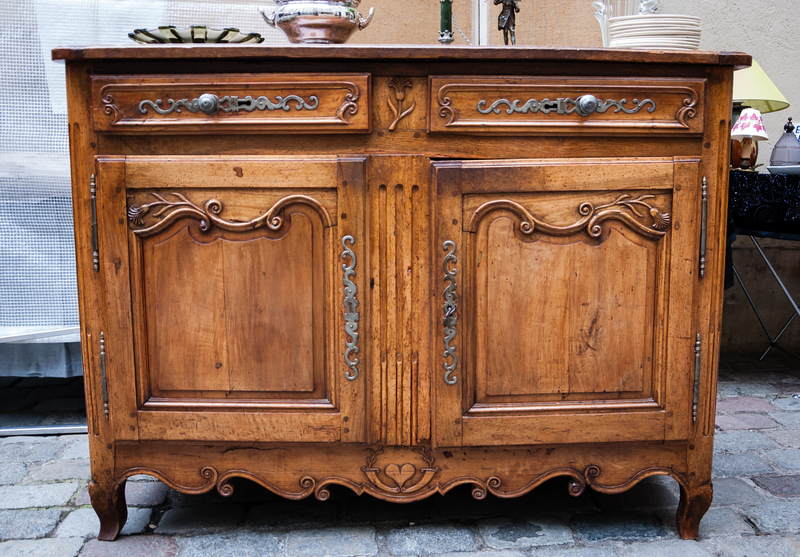
Many house clearance jobs are driven by one or two large pieces that have become difficult to move or no longer suit the property. Our furniture removal work covers bulky household items that can dominate a room, block access or make it hard to complete a wider clear-out. Rather than leaving you to deal with awkward lifting or repeated trips, we can remove larger pieces as part of a planned clearance or as a focused job in its own right. This is especially useful when room layout or access means that the item needs to be handled carefully.
Furniture clearance can be a practical choice when preparing a property for cleaning, decorating or sale, but it is equally relevant when a family simply wants to replace outdated items and clear the space safely. We can assess the likely scale of the work from a description of the pieces involved, including whether the items are upstairs, assembled tightly into a room or mixed with other contents. In some cases, splitting the job into furniture and general contents makes sense; in others, combining everything into one clearance is the simpler option.
- Bed frames, mattresses and wardrobes
- Sofas, armchairs and occasional seating
- Tables, desks and dining furniture
- Shelving, cabinets and storage units
- Mixed bulky household items that need organised removal
Flat, loft and garage clearances
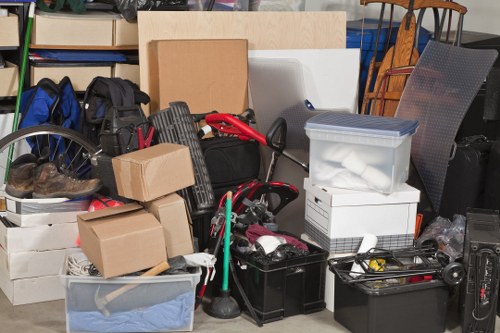
Properties often need targeted clearances rather than a whole-house visit, and that is where flat, loft and garage work becomes useful. A flat clearance may require attention to stair access, shared entrances or compact rooms packed with mixed belongings. Loft clearance usually involves items that have stayed stored for years, often in bags, boxes or mismatched containers that need sorting before anything is moved. Garage clearance can be similar, though the items may be heavier, dustier or more likely to include a mix of storage, tools and household overflow.
These jobs tend to work best when the main access points and the general type of contents are known in advance. That allows the clearance to be planned sensibly and helps decide whether the work should be done as a single visit or alongside other rooms. It is also useful to note whether the space is partially blocked, has narrow steps or contains items that need separating before removal. If you are arranging a more focused job, describe the area clearly so the quotation reflects the real task rather than a guess.
Why focused clearances can be easier to manage
Targeting a single area can reduce disruption while still making a substantial difference to the property. A loft can become easier to inspect, a garage can be returned to storage use, and a flat can be prepared for cleaning or redecoration without clearing the whole building. These smaller scopes also make it easier to decide what should be reused, what belongs elsewhere and what is simply taking up room. Clear the bottleneck first, then decide whether the rest of the property needs attention as well.
Home, office and business waste removal

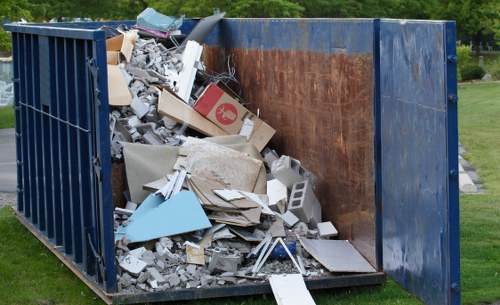
Although the core service here is house clearance, some customers need help with mixed waste and contents from homes, offices or business premises that have gradually filled with items no longer needed. Our waste removal work can support that wider need when the task is more about clearing unwanted materials and less about a single room of furniture. For a property owner, landlord or business manager, it may be better to arrange one organised removal rather than trying to handle rubbish, broken items and surplus stock separately.
Business waste removal and office clearance can involve desks, chairs, storage units, archive material, packaging, old displays and general fit-out contents. The practical difference is often in the type of access and the need to keep the work tidy around other operations. If a workspace is still active, it can help to clear one zone at a time so essential equipment remains reachable. Home clearances, by contrast, may need more attention to sentimental items, household records and possessions that are still being sorted through. Plan what must stay before the removal begins.
Where a mixed property contains both domestic and work-related contents, the work can usually be organised into separate groups so that removal is efficient and the remaining space is left more usable. That can be useful during moves, refurbishments, tenant changes or reorganisations. The important point is to match the service to the actual contents rather than forcing everything into a generic description. If the job includes more than one type of room, say so when requesting a quotation and list the main items involved.
Furniture disposal and recycling choices
Not every item taken from a property is in the same condition, and a good clearance service should treat that carefully. Furniture disposal may be required for damaged items, worn-out pieces or objects that are no longer suitable for reuse in the home. Where appropriate, items can be separated for recycling or other responsible processing rather than being treated as identical waste. That distinction matters because a household clearance often includes both usable and unusable belongings in the same space.
We also consider the make-up of the load when planning the work. A room filled with broken furniture, a garage containing mixed materials and a loft stacked with old household contents may each need different handling. Some items may be simple to remove, while others need dismantling or more deliberate manoeuvring through tight spaces. This is one reason it helps to mention any large furniture, fragile pieces or grouped items when you first enquire. Two simple questions are worth answering: what is going, and what needs special handling?
Choosing what to remove first
If you are uncertain where to start, begin with the largest items or the ones blocking access. Removing those first often reveals the rest of the space and makes it easier to decide whether a broader clearance is needed. In homes where several rooms are affected, it can be sensible to prioritise furniture that is taking up the most room, then move on to smaller contents. That approach can make a clearance feel more manageable and help the quotation reflect the work in a realistic way.
Useful information for a quotation

A well-prepared quotation usually depends on the practical details of the job, not on broad estimates. The most useful information is the type of property, the rooms involved, the general volume of items and any access points that may affect removal. If you can outline whether the contents include furniture, loft storage, garage items or business materials, that will help the quotation match the likely work. It is also sensible to mention anything unusually heavy, awkward or fragile so the scope can be judged accurately.
You do not need to create a complicated inventory unless the job is extensive, but a simple description can go a long way. For example, a partial house clearance might only involve a bedroom, a landing cupboard and a few bulky pieces, while a fuller job could include several floors and mixed furniture. If photographs are available, they can help present the layout and the amount of work more clearly, especially where access is tight or items are stacked. Clear detail at the start can prevent confusion later.
When you ask for a quotation, it is useful to say whether the property is occupied, empty or part of a move-out process, because that helps shape the likely sequence of work. It is also helpful to mention any items that should remain on site, as well as anything that may need separating from the rest. That way, the quotation can reflect the actual clearance rather than a broad assumption. If the list is changing, give the current position and update it as needed.
Recycling, re-use and responsible handling
House clearance is not only about removal; it is also about deciding how different items should be handled once they leave the property. Some belongings may still have life left in them, while others may only be suitable for recycling or disposal. A sensible clearance process takes these differences into account rather than treating the whole job as a single pile of waste. This is especially important in homes where furniture, household goods and stored items have built up over time and contain a mixture of conditions.
Recycling and sustainability matter because they influence how a clearance is organised from the outset. When items are separated properly, it becomes easier to direct suitable materials away from general waste and toward more appropriate routes. That can apply to timber furniture, metal pieces, cardboard, mixed packaging and various reusable household items. The exact outcome depends on the condition of each item and what is practical on the day, but the principle is the same: sort carefully and avoid unnecessary waste where possible.
Keeping the clearance organised
A tidy clearance is usually a more efficient one. Grouping similar items together, identifying anything that must stay and pointing out anything fragile or built-in all help the process move smoothly. In a family home, that may mean setting aside photographs, documents or keepsakes before the main clearance begins. In a rental property, it may mean marking the items that belong to the landlord or tenant so there is no confusion. Good organisation supports both speed and accuracy.
House clearance for moves, refurbishments and changing plans

Many enquiries arise when a property is about to change in some way. A move can leave furniture that will not fit in the next home, while refurbishment work may require a room or entire floor to be emptied before contractors can start. A tenancy change may also call for prompt and orderly clearance of remaining contents. In each case, the main aim is not simply to remove items, but to create a property that is ready for the next stage with as little disruption as possible.
Because the circumstances vary, the best clearance plan is often the one that reflects what happens before and after the removal. If a room is being decorated, it may be worth clearing the largest items first. If a move is underway, the items that are no longer needed may be better separated from the things being packed. If a property contains a combination of domestic, storage and furniture items, the work can be divided sensibly so the relevant parts are dealt with in sequence. Keep the aim clear: the right items out, the right items left behind.
Whether you need a full property cleared or a smaller, targeted visit, the process begins with a straightforward description of the job. Explain the area, the type of contents and any access details, then request a quotation based on that scope. If the clearance is time-sensitive or involves several categories of item, say so in the first message so the work can be planned in a realistic way. Request a quotation when you are ready to move forward.
About Hornsey
Hornsey is a district in the London Borough of Haringey in north London, situated between Crouch End, Muswell Hill, Wood Green and Turnpike Lane. The name is closely associated with Hornsey High Street, Hornsey Road and Hornsey Station, and the area has long been shaped by transport routes linking the borough to central London and the wider north of the city. Much of Hornsey’s character comes from its mix of older streets, late-Victorian and Edwardian housing, and more recent development layered around established residential pockets. The district is also known for the transition between urban density and greener edges, with Alexandra Palace nearby and access to parkland and route networks that connect towards Finsbury Park and the surrounding neighbourhoods. Hornsey’s history reaches back to the medieval period, when the name referred to a settlement recorded in early sources long before the area became part of modern London’s expanded suburbs. Over time, the district changed from a more rural fringe into an increasingly built-up part of the capital, especially during the nineteenth century as rail transport improved. St Mary’s Church and surrounding historic streets offer reminders of that longer past, while later housing and commercial buildings reflect the growth of the area into a busy urban neighbourhood. Hornsey also sits within a part of north London that has a strong local identity, shaped by independent shops, community spaces and the blend of residential streets with main-road activity. Parks and open spaces, together with the nearby cultural draw of Alexandra Palace, give the area a broader social life beyond its immediate high street. The result is a place where older architecture, movement routes and local amenities sit closely together, giving Hornsey a distinctive position within the borough.
Practical clearance planning
Good planning can make the difference between a job that feels complicated and one that runs steadily. It helps to think about the sequence in which rooms will be tackled, especially if access is shared or if certain spaces are more difficult to reach than others. For instance, a loft may be easiest to clear before downstairs furniture is moved, or a garage may be best handled before the rest of the property because it contains the bulkiest items. Planning in this way does not need to be elaborate; it simply keeps the work organised.
There are also practical decisions to make about separation, access and timing. If an item is staying, it should be clearly set aside. If a doorway is narrow or stairs are tight, that should be mentioned so the clearance can be judged properly. If several rooms contain mixed contents, it can help to identify the room with the highest priority and work outwards from there. These points are not about making the job feel difficult; they are about making sure the quotation and the clearance plan match the property as it really is.
If you are comparing options, remember that a clear description of the space usually matters more than a long list of assumptions. One sentence about the rooms, one sentence about the main items and one sentence about any access issues can be enough to begin. From there, the job can be assessed on its actual shape rather than on a rough estimate. That is often the simplest path to a fair quotation and a sensible arrangement.
Getting the right scope for the job
Whether the task is a small flat clearance or a larger house clearance, the most useful starting point is a clear scope. That means deciding what needs removing, what should remain and whether the work is focused on furniture, loft contents, garage items or a broader mix of household belongings. When the scope is clear, the service can be planned more accurately and the result is more likely to suit the property and the timing involved.
It can also be helpful to think about the final state you want from the space. A cleared room may need only to be emptied, or it may need to be ready for cleaning, redecorating or handover. A garage may need to be left open for storage again, while a loft may simply need to be made accessible. Those differences affect how the job is approached and what sort of quotation is appropriate. If you want the work reviewed as a whole, a concise description is usually enough to begin.
When you are ready, send the details that define the task and ask for a quotation. If the property includes mixed contents, multiple floors or several bulky items, mention those points together so the scope is accurate. Ask for a quotation and let the clearance be shaped around the actual rooms and items involved.